|
RISK
ASSESSMENT
How Much Insurance is Enough?
When purchasing insurance, it is important to buy
the right amount for your particular circumstances.
The following summarizes our experience. For ease
of understanding, the following generalizations are
categorized as Physical Assets or Liability.
Physical Assets
Physical assets include all of your physical possessions
including your primary and secondary homes, autos,
boats and other items that are subject to insurable
perils.
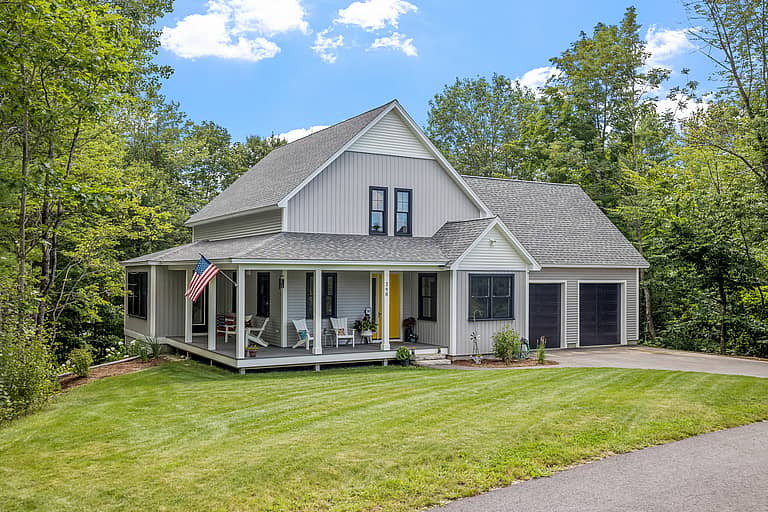
Homeowners – For many, the
cost of their home can be the largest single concentration
of investment monies. But yet, according to numerous
insurance researchers, most homeowners are underinsured.
There are a variety of reasons why this is the case,
including homebuilding material inflation, failure
to increase coverage after home improvement upgrades
and a booming real estate market which inflates replacement
cost valuation. The fact remains, in the event of
a major loss, coverage is inadequate in the majority
of instances.
It is extremely important that the replacement cost
limit in the homeowner’s policy (Dwelling Coverage
A) be a current and accurate representation of what
it would cost to rebuild your home in its entirety
using materials and craftsmanship of like kind. When

estimating the replacement cost consider the home’s
features, its size, the nature and quality of the
construction, the materials used, and where it is
located. It is a recognized fact that the cost of
construction will vary from town to town based upon
the profit margin expectations of builders.
The replacement value of your home often varies significantly
from its actual purchase price, its estimated market
value, its assessed value and its appraised value
for taxes. In many instances, it can cost more to
rebuild your home than to buy a new one.
Kettle Creek can help you to estimate the replacement
cost of your home. As a guideline and tool to help
you think through the process consider the following:

Auto Physical Damage - Auto insurance
blends several types of coverage into one policy including:
physical damage to your auto, bodily injury and property
damage liability, medical, and uninsured and underinsured
motorist’s coverage. In terms of physical damage
to your own auto, coverage is available on either
an Actual Cash Value (“ACV”) basis or
an Agreed Amount basis. In essence, with ACV the customer’s
recovery is determined after the loss and is based
upon the published value of the car and its perceived
pre-accident condition as determined by a claims adjuster.
Alternatively, the Agreed Amount approach takes into
account the values as published in those same guides
but states the value in the policy at the outset of
the policy period. In most instances, the value insured
is agreed to by the insured and the insurer prior
to policy inception. Coverage for physical damage
should reflect the actual market value of the vehicle.
It is Kettle Creek’s opinion that this is a
superior way to insure an auto for collision or comprehensive
coverage.
Other First Party Injury - Uninsured
motorists and underinsured motorists coverage (“UM/UIM”)
is probably one of the most misunderstood forms of
insurance. It is bundled as part of your automobile
policy and in rare instance, will be included in a
personal excess liability policy. Uninsured and underinsured
motorists coverage (UM/UIM) provides first party coverage
in the event an accident occurs and the operator of
the other vehicle does not have liability insurance
or does not carry adequate liability insurance. According
to the summary of by-state auto insurance laws published
by the Insurance Information Institute (http://www.iii.org/individuals/auto/a/canidrive/
) the highest minimum required limit for bodily injury
is $25,000. It is apparent that $25,000 is sorely
inadequate should a major accident happen, so purchasing
UM/UIM is a way to protect you against the financial
irresponsibility of other drivers.
Personal Liability
Personal Liability pays for liability claims arising
from accidents that occur on your premises resulting
from your actions (or failure to take action) or as
a result of your activities. Liability includes, but
is not limited to, damage to the property of others,
bodily injury, contractual liability and personal
injury to name a few of the types. Having adequate
protective limits is imperative.
Third Party Liability – As
a rule of thumb, Kettle Creek believes that the limits
of liability purchased should be equal to or greater
than the total market value of all of your assets
including real estate, other possessions, financial
assets and retirement funds. Should an untoward event
take place that results in a law suit, it is quite
possible to be sued for more than you have, and with
the recent change in personal bankruptcy laws, it
is more difficult to protect your assets than ever
before.
The Building Blocks – We
generally recommend buying $500,000 of Homeowners
Personal Liability as part of the Homeowner’s
Policy and buying $500,000 in liability limits as
part of the Auto Policy. Should you have a boat that,
because of length or the horse power of the motor,
necessitates the purchase of a separate boaters policy,
be sure the Protection & Indemnity limits equal
$500,000. This is true with all of your assets, including
vacant land. Buy $500,000 in liability limits in all
underlying policies. Supplement the underlying policies
with Personal Excess Liability coverage such that
the sum of the underlying liability limits purchased,
plus the umbrella liability policy limit, is equal
to, or greater than, the market value of all of your
assets. The following graphic conceptually portrays
the thought process:
How Much Insurance is Enough
- Liability

What Actions You Should Take
So what should you do to be sure you are
adequately protected?
- Prepare an inventory. Calculate the replacement
cost.
- Calculate the market value of all of your assets.
- Consider your’s and your family’s
potential loss exposures (homes, boats, cars, kids,
dogs, pools, domestic help, trampolines, etc.);
- Recognize that you can be sued for more than
you have.
- Understand that the insurance company has the
obligation to defend you for covered losses.
- Review your policies to be sure you are properly
covered. Know what is covered and what is not covered.
- Call us!
|